
Improving Brain Health
As rates of Dementia and Alzheimer's increase, it becomes quite important to pay attention to your brain health. Here are some great ideas to keep you sharp!
As technology advances, we have more and more “convenience”
factors that require us to use our brain less. One example most can relate
to is that we don’t have to remember phone numbers any more, since
they’re handily in our phones. For those of us over age 40, you can
probably remember when you learned and retained multiple phone numbers.
Nowadays, many people couldn’t tell you more than a few numbers and
some don’t even know their own families’ numbers! One that
really hit me personally over the last few months is how much I have grown
to rely on GPS. My 2003 van does not have GPS, and it was shocking to me how
much I have just tuned out and let the GPS do the work! When I was in my
20’s, I was a military wife, and the Navy moved us around every few
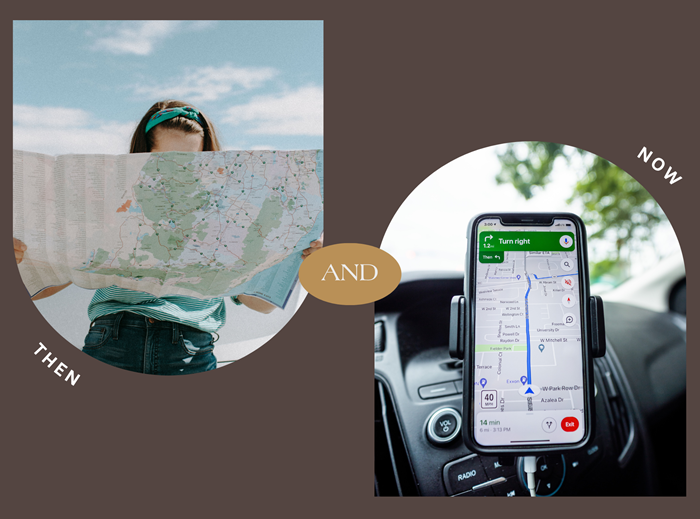
months. Of course, no GPS in those days, so you had to get maps of the area
to figure out how to get where you were going. As we traveled to and around
new cities, I was the co-pilot and navigator, riding with an open map in my
lap and trying to plot the best routes. Not an easy task when you’re
driving around an unfamiliar city, figuring out the routes on the fly! But
exercises like navigating and learning phone numbers really help to keep us
mentally sharper.
If you don’t want to give up the modern conveniences, here are some other things you can do to work your brain:
Brain Gym- These 26 exercises are designed to promote brain/body coordination. The program was developed by Paul and Gail Dennison in the 1980’s and has been used to help people with learning, focus, and memory. YouTube is a great resource for these! Here’s a simple one I found, to give you an example.
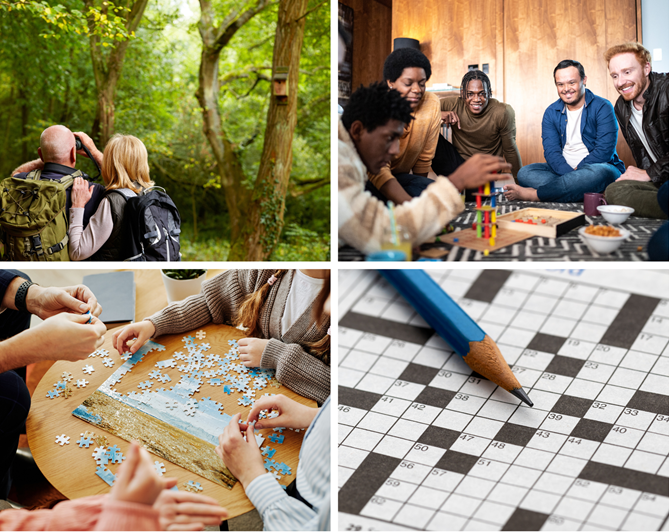
Puzzles- We’re all familiar with this one! Challenging yourself to think and solve a crossword puzzle or “find the differences between these 2 nearly identical pictures” (Remember Highlights for Children magazine?), playing Scrabble or putting together a jigsaw puzzle all are legitimate brain exercises.
Games- Games like Clue, Monopoly or card games similarly challenge memory and cause us to think ahead to plan moves. Way more fun than vegging in front of a TV!
Bird watching- A 2026 study published in the Journal of Neuroscience
demonstrated that people who get into birdwatching actually showed physical
improvements in their brains. They had higher cellular density and more
compact tissue in brain regions responsible for working memory, spatial
awareness, and object recognition. Birdwatching involves learning sounds and
pairing that with observations of the tiny details of each bird to be able
to differentiate them. Birders also have to look carefully to find birds in
trees or grasses, which is not as easy as you might think! Seeing or hearing
birds was also linked to reduced stress, lower blood pressure, and improved
mood. This is a new hobby of mine personally, and I highly recommend it! If
you’d like to try it out, a great starting place is the Merlin app
from the Cornell University Ornithology department. You turn it on, it
listens to the bird songs, then displays the image of the bird, helping you
to identify and look for the birds around you.
 Your brain, like most other things in your body, obeys the “Use it
or Lose it” principle. I could write about the many supplements that
can help, like Lion’s Mane, Fish Oil, or Life Extension’s
Senolytic Activator (all available on our Fullscript site) and these are all quite helpful. But without actually USING
your brain you cannot optimize its health.
Your brain, like most other things in your body, obeys the “Use it
or Lose it” principle. I could write about the many supplements that
can help, like Lion’s Mane, Fish Oil, or Life Extension’s
Senolytic Activator (all available on our Fullscript site) and these are all quite helpful. But without actually USING
your brain you cannot optimize its health.
So, let’s reinstitute Game Night, work a puzzle and watch the birds, plants and other amazing creatures in our environment. I’d love to hear what YOU do that keeps your brain active, too!